

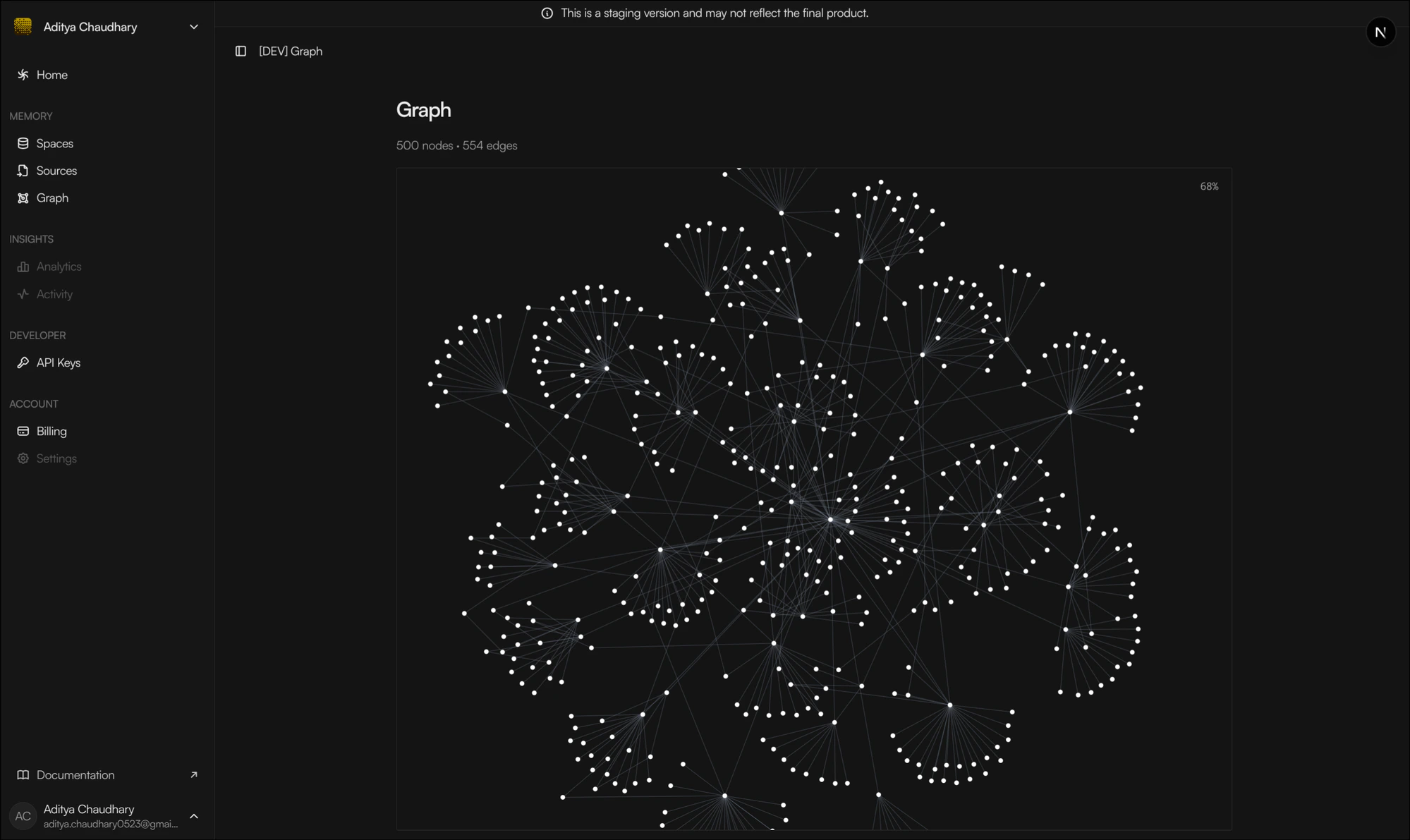
@crosmos/graph is a force-directed graph renderer for React. It is cluster-aware by default and works with any data shape — give it nodes and edges with ids and you get an interactive canvas.
Install
react, react-dom, and react-force-graph-2d are peer dependencies. Install them in your host app so you don’t end up with duplicates.Render a graph
Fetch data with whatever you already use (TanStack Query, SWR, RSC, plainfetch) and pass arrays straight in.
BaseNode { id } and BaseEdge { id, source, target }. Carry your domain fields on the node and edge directly; accessor functions stay fully type-safe.
Mock data for development
A 500-node mock dataset ships with the package and is useful for screenshots, performance tests, and trying tuning options.USER hub, the 7 canonical entity types, the 23-relation vocabulary, and bimodal confidence scores. It’s deterministic across loads.
What’s next
Reference
Every prop, the imperative handle, data sources, clustering, and SSR notes.
Theme
Every theme key, with defaults and the CSS variables that drive popovers and the zoom indicator.
Targets modern evergreen browsers (latest two majors of Chrome, Edge, Firefox, Safari). The default CSS uses
oklch() color, which falls back to no background on older browsers.